





An Economist's Guide to Environmentalism: A Toolkit for Understanding and Solving Ecological Problems
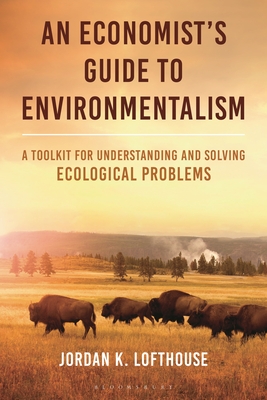
An Economist's Guide to Environmentalism: A Toolkit for Understanding and Solving Ecological Problems
Explains how economics can be used to solve an array of environmental issues from endangered species to global warming.
Many species are threatened with extinction and landscapes are being destroyed. Water is becoming increasingly scarce, harming ecological systems and human societies. Perhaps the most pressing environmental problem is human-caused climate change. What caused these problems, and what can we do about them? In An Economist's Guide to Environmentalism, Jordan K. Lofthouse demonstrates how the field of economics can explain the rise of environmental problems and offers a framework to evaluate the vast array of potential solutions. Lofthouse assembles a "toolkit" of easy-to-understand economic concepts and then applies those tools to a variety of environmental problems. These tools include incentives, constraints, trade-offs, unintended consequences, institutional analysis, and more. The examples in this book highlight how environmental issues often stem from poorly defined or poorly enforced property rights.Lofthouse argues for novel solutions such as assigning property rights to wildlife on the verge of extinction, private approaches to land conservation, and the implementation of water markets. Addressing global-scale problems like climate change requires the innovative and entrepreneurial discoveries of many different people in governments, markets, and civil society. Readers of this book will discover new opportunities and a refreshing, practical approach to protecting the planet through the insights of economics.
PRP: 353.40 Lei

Acesta este Prețul Recomandat de Producător. Prețul de vânzare al produsului este afișat mai jos.
282.72Lei
282.72Lei
353.40 LeiPrimești 282 puncte
Livrare in 2-4 saptamani
Descrierea produsului
Explains how economics can be used to solve an array of environmental issues from endangered species to global warming.
Many species are threatened with extinction and landscapes are being destroyed. Water is becoming increasingly scarce, harming ecological systems and human societies. Perhaps the most pressing environmental problem is human-caused climate change. What caused these problems, and what can we do about them? In An Economist's Guide to Environmentalism, Jordan K. Lofthouse demonstrates how the field of economics can explain the rise of environmental problems and offers a framework to evaluate the vast array of potential solutions. Lofthouse assembles a "toolkit" of easy-to-understand economic concepts and then applies those tools to a variety of environmental problems. These tools include incentives, constraints, trade-offs, unintended consequences, institutional analysis, and more. The examples in this book highlight how environmental issues often stem from poorly defined or poorly enforced property rights.Lofthouse argues for novel solutions such as assigning property rights to wildlife on the verge of extinction, private approaches to land conservation, and the implementation of water markets. Addressing global-scale problems like climate change requires the innovative and entrepreneurial discoveries of many different people in governments, markets, and civil society. Readers of this book will discover new opportunities and a refreshing, practical approach to protecting the planet through the insights of economics.
Detaliile produsului



