





Epistle to Yemen: and Introduction to Helek
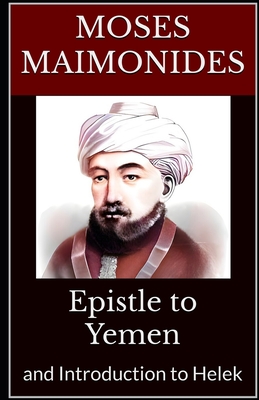
Epistle to Yemen: and Introduction to Helek
"In none of Maimonides' works did he reveal himself so much the leader and comforter of his people as in his Iggeret Teman (Epistle to Yemen) ... The effect of this letter on the Jewish community of Yemen was miraculous. Its members were heartened by the new rays of hope which permeated the Epistle, giving them a sense of pride in their heritage and a determination to weather the storm with dignity."
- Professor Jacob I. Dienstag In 1165 C.E., the Jewish community of Yemen was in grave crisis. The fanatical Muslim ruler of Yemen presented the Jews with a choice: conversion to Islam, or martyrdom. Additionally, a zealous Jewish apostate began a campaign to convince his former co-coreligionists to convert to Islam, preaching that Mohammed was a divinely-sent prophet alluded to in the Bible. And if that was not enough, an impoverished Yemenite Jew began proclaiming that he was the long-awaited Messiah. In desperation, the Yemenite Jewish community turned to the greatest scholar of the generation: Rabbi Moses ben Maimon, also known as Maimonides, and in Hebrew, Rambam. Maimonides, not yet 40 years old, had recently been appointed leader of the Egyptian Jewish community. Maimonides had experienced first-hand the persecution of Muslim extremists in his homeland of Spain, where his family had chosen exile rather than forced conversion at the hands of the Almohad Muslims. It is not surprising that Maimonides was acutely sensitive to the plight of the Jews of Yemen. Maimonides responded to Rabbi Jacob's inquiry with his "Epistle to Yemen" (Iggeret Teiman). Despite the obvious dangers involved, Maimonides wrote his bold response in Arabic so that his response would be understood by all members of the threatened Yemenite community. The epistle was successful. The Yemenite Jews remained faithful to their religion despite the grave dangers facing them. Maimonides also used his influence at the court of Saladin in Egypt to intervene in their behalf, and the persecution ceased. Several years prior to writing his "Epistle to Yemen," Maimonides published his monumental "Commentary to the Mishnah." Perhaps the most famous section of this major work is his Introduction to Mishnah Tractate Sanhedrin, "Perek Helek". This article deals with eschatological themes in Judaism, and concludes with Maimonides' famous creed, "The Thirteen Principles of the Torah." Since the essay discusses the Messianic Era and the final redemption of Israel, it is a natural companion to the Epistl
- Professor Jacob I. Dienstag In 1165 C.E., the Jewish community of Yemen was in grave crisis. The fanatical Muslim ruler of Yemen presented the Jews with a choice: conversion to Islam, or martyrdom. Additionally, a zealous Jewish apostate began a campaign to convince his former co-coreligionists to convert to Islam, preaching that Mohammed was a divinely-sent prophet alluded to in the Bible. And if that was not enough, an impoverished Yemenite Jew began proclaiming that he was the long-awaited Messiah. In desperation, the Yemenite Jewish community turned to the greatest scholar of the generation: Rabbi Moses ben Maimon, also known as Maimonides, and in Hebrew, Rambam. Maimonides, not yet 40 years old, had recently been appointed leader of the Egyptian Jewish community. Maimonides had experienced first-hand the persecution of Muslim extremists in his homeland of Spain, where his family had chosen exile rather than forced conversion at the hands of the Almohad Muslims. It is not surprising that Maimonides was acutely sensitive to the plight of the Jews of Yemen. Maimonides responded to Rabbi Jacob's inquiry with his "Epistle to Yemen" (Iggeret Teiman). Despite the obvious dangers involved, Maimonides wrote his bold response in Arabic so that his response would be understood by all members of the threatened Yemenite community. The epistle was successful. The Yemenite Jews remained faithful to their religion despite the grave dangers facing them. Maimonides also used his influence at the court of Saladin in Egypt to intervene in their behalf, and the persecution ceased. Several years prior to writing his "Epistle to Yemen," Maimonides published his monumental "Commentary to the Mishnah." Perhaps the most famous section of this major work is his Introduction to Mishnah Tractate Sanhedrin, "Perek Helek". This article deals with eschatological themes in Judaism, and concludes with Maimonides' famous creed, "The Thirteen Principles of the Torah." Since the essay discusses the Messianic Era and the final redemption of Israel, it is a natural companion to the Epistl
PRP: 65.80 Lei

Acesta este Prețul Recomandat de Producător. Prețul de vânzare al produsului este afișat mai jos.
59.22Lei
59.22Lei
65.80 LeiPrimești 59 puncte
Livrare in 2-4 saptamani
Descrierea produsului
"In none of Maimonides' works did he reveal himself so much the leader and comforter of his people as in his Iggeret Teman (Epistle to Yemen) ... The effect of this letter on the Jewish community of Yemen was miraculous. Its members were heartened by the new rays of hope which permeated the Epistle, giving them a sense of pride in their heritage and a determination to weather the storm with dignity."
- Professor Jacob I. Dienstag In 1165 C.E., the Jewish community of Yemen was in grave crisis. The fanatical Muslim ruler of Yemen presented the Jews with a choice: conversion to Islam, or martyrdom. Additionally, a zealous Jewish apostate began a campaign to convince his former co-coreligionists to convert to Islam, preaching that Mohammed was a divinely-sent prophet alluded to in the Bible. And if that was not enough, an impoverished Yemenite Jew began proclaiming that he was the long-awaited Messiah. In desperation, the Yemenite Jewish community turned to the greatest scholar of the generation: Rabbi Moses ben Maimon, also known as Maimonides, and in Hebrew, Rambam. Maimonides, not yet 40 years old, had recently been appointed leader of the Egyptian Jewish community. Maimonides had experienced first-hand the persecution of Muslim extremists in his homeland of Spain, where his family had chosen exile rather than forced conversion at the hands of the Almohad Muslims. It is not surprising that Maimonides was acutely sensitive to the plight of the Jews of Yemen. Maimonides responded to Rabbi Jacob's inquiry with his "Epistle to Yemen" (Iggeret Teiman). Despite the obvious dangers involved, Maimonides wrote his bold response in Arabic so that his response would be understood by all members of the threatened Yemenite community. The epistle was successful. The Yemenite Jews remained faithful to their religion despite the grave dangers facing them. Maimonides also used his influence at the court of Saladin in Egypt to intervene in their behalf, and the persecution ceased. Several years prior to writing his "Epistle to Yemen," Maimonides published his monumental "Commentary to the Mishnah." Perhaps the most famous section of this major work is his Introduction to Mishnah Tractate Sanhedrin, "Perek Helek". This article deals with eschatological themes in Judaism, and concludes with Maimonides' famous creed, "The Thirteen Principles of the Torah." Since the essay discusses the Messianic Era and the final redemption of Israel, it is a natural companion to the Epistl
- Professor Jacob I. Dienstag In 1165 C.E., the Jewish community of Yemen was in grave crisis. The fanatical Muslim ruler of Yemen presented the Jews with a choice: conversion to Islam, or martyrdom. Additionally, a zealous Jewish apostate began a campaign to convince his former co-coreligionists to convert to Islam, preaching that Mohammed was a divinely-sent prophet alluded to in the Bible. And if that was not enough, an impoverished Yemenite Jew began proclaiming that he was the long-awaited Messiah. In desperation, the Yemenite Jewish community turned to the greatest scholar of the generation: Rabbi Moses ben Maimon, also known as Maimonides, and in Hebrew, Rambam. Maimonides, not yet 40 years old, had recently been appointed leader of the Egyptian Jewish community. Maimonides had experienced first-hand the persecution of Muslim extremists in his homeland of Spain, where his family had chosen exile rather than forced conversion at the hands of the Almohad Muslims. It is not surprising that Maimonides was acutely sensitive to the plight of the Jews of Yemen. Maimonides responded to Rabbi Jacob's inquiry with his "Epistle to Yemen" (Iggeret Teiman). Despite the obvious dangers involved, Maimonides wrote his bold response in Arabic so that his response would be understood by all members of the threatened Yemenite community. The epistle was successful. The Yemenite Jews remained faithful to their religion despite the grave dangers facing them. Maimonides also used his influence at the court of Saladin in Egypt to intervene in their behalf, and the persecution ceased. Several years prior to writing his "Epistle to Yemen," Maimonides published his monumental "Commentary to the Mishnah." Perhaps the most famous section of this major work is his Introduction to Mishnah Tractate Sanhedrin, "Perek Helek". This article deals with eschatological themes in Judaism, and concludes with Maimonides' famous creed, "The Thirteen Principles of the Torah." Since the essay discusses the Messianic Era and the final redemption of Israel, it is a natural companion to the Epistl
Detaliile produsului



