headerdesktop craciuntarg12dec25

MAI SUNT 00:00:00:00

MAI SUNT

X

headermobile craciuntarg12dec25

MAI SUNT 00:00:00:00

MAI SUNT

X

Promotii popup img

🎄Târgul cadourilor de Crăciun✨

Reduceri de până la -74%!

Răsfoiește & Dăruiește povești>

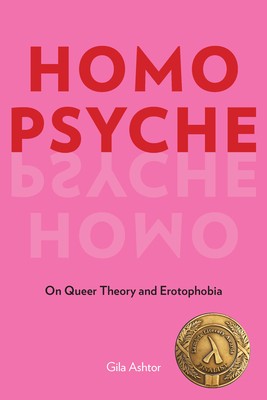
Homo Psyche: On Queer Theory and Erotophobia

De (autor): Gila Ashtor

Homo Psyche: On Queer Theory and Erotophobia - Gila Ashtor

Homo Psyche: On Queer Theory and Erotophobia

De (autor): Gila Ashtor

Winner, Alan Bray Memorial Book Award
2022 Lammy Finalist, LGBTQ Studies

Can queer theory be erotophobic? This book proceeds from the perplexing observation that for all of its political agita, rhetorical virtuosity, and intellectual restlessness, queer theory conforms to a model of erotic life that is psychologically conservative and narrow. Even after several decades of combative, dazzling, irreverent queer critical thought, the field remains far from grasping that sexuality's radical potential lies in its being understood as "exogenous, intersubjective and intrusive" (Laplanche). In particular, and despite the pervasiveness and popularity of recent calls to deconstruct the ideological foundations of contemporary queer thought, no study has as yet considered or in any way investigated the singular role of psychology in shaping the field's conceptual impasses and politico-ethical limitations.

Through close readings of key thinkers in queer theoretical thought--Eve Kosofsky Sedgwick, Leo Bersani, Lee Edelman, Judith Butler, Lauren Berlant, and Jane Gallop--Homo Psyche introduces metapsychology as a new dimension of analysis vis-à-vis the theories of French psychoanalyst Jean Laplanche, who insisted on "new foundations for psychoanalysis" that radically departed from existing Freudian and Lacanian models of the mind. Staging this intervention, Ashtor deepens current debates about the future of queer studies by demonstrating how the field's systematic neglect of metapsychology as a necessary and independent realm of ideology ultimately enforces the complicity of queer studies with psychological conventions that are fundamentally erotophobic and therefore inimical to queer theory's radical and ethical project.

Citește mai mult

-20%

transport gratuit

PRP: 218.32 Lei

!

Acesta este Prețul Recomandat de Producător. Prețul de vânzare al produsului este afișat mai jos.

174.66Lei

174.66Lei

218.32 Lei

Primești 174 puncte

Important icon msg

Primești puncte de fidelitate după fiecare comandă! 100 puncte de fidelitate reprezintă 1 leu. Folosește-le la viitoarele achiziții!

Indisponibil

Plasează rapid comanda

Important icon msg

Poți comanda acest produs introducând numărul tău de telefon. În cel mai scurt timp vei fi apelat de un operator Libris pentru preluarea datelor necesare.

Completează mai jos numărul tău de telefon

Descrierea produsului

Winner, Alan Bray Memorial Book Award
2022 Lammy Finalist, LGBTQ Studies

Can queer theory be erotophobic? This book proceeds from the perplexing observation that for all of its political agita, rhetorical virtuosity, and intellectual restlessness, queer theory conforms to a model of erotic life that is psychologically conservative and narrow. Even after several decades of combative, dazzling, irreverent queer critical thought, the field remains far from grasping that sexuality's radical potential lies in its being understood as "exogenous, intersubjective and intrusive" (Laplanche). In particular, and despite the pervasiveness and popularity of recent calls to deconstruct the ideological foundations of contemporary queer thought, no study has as yet considered or in any way investigated the singular role of psychology in shaping the field's conceptual impasses and politico-ethical limitations.

Through close readings of key thinkers in queer theoretical thought--Eve Kosofsky Sedgwick, Leo Bersani, Lee Edelman, Judith Butler, Lauren Berlant, and Jane Gallop--Homo Psyche introduces metapsychology as a new dimension of analysis vis-à-vis the theories of French psychoanalyst Jean Laplanche, who insisted on "new foundations for psychoanalysis" that radically departed from existing Freudian and Lacanian models of the mind. Staging this intervention, Ashtor deepens current debates about the future of queer studies by demonstrating how the field's systematic neglect of metapsychology as a necessary and independent realm of ideology ultimately enforces the complicity of queer studies with psychological conventions that are fundamentally erotophobic and therefore inimical to queer theory's radical and ethical project.

Citește mai mult

S-ar putea să-ți placă și

De același autor

Părerea ta e inspirație pentru comunitatea Libris!

Istoricul tău de navigare

Acum se comandă

Noi suntem despre cărți, și la fel este și

Newsletter-ul nostru.

Abonează-te la veștile literare și primești un cupon de -10% pentru viitoarea ta comandă!

*Reducerea aplicată prin cupon nu se cumulează, ci se aplică reducerea cea mai mare.

Mă abonez image one
Mă abonez image one
Accessibility Logo

Salut! Te pot ajuta?

X