





How We Know PB
How We Know PB
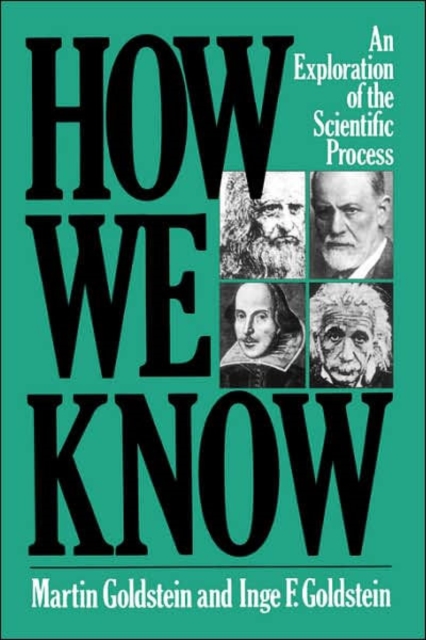
The portraits of Freud, Shakespeare, Einstein, and Leonardo da Vinci on the cover symbolize a major theme of How We Know-that the creative imagination plays a role in the sciences no less than in the arts, and that scientific discoveries have an aesthetic beauty of their own that can be enjoyed by the nonscientist. Written to be understood by readers without proper scientific training, the main features of scientific method are illustrated by the use of case histories of research and discovery. The book also explores such questions as the nature of scientific understanding of the world, how theories are invented, how they are tested experimentally, and whether the scientist is ever "objective." The broad scientific experience of Martin and Inge Goldstein has made them aware not only of the distinctive features of diverse disciplines, but also of the common ground all fields of science share. This book was written in the belief that these common features of the scientific enterprise can be communicated to the nonscientist, and that it is important both for science and for society as a whole that this be done. How We Know offers help to those mystified and confused by the methods and aims of science. It firmly establishes science as a product of human beings acting in human ways, a process where the search for beauty can be as compelling as the search for truth.
The portraits of Freud, Shakespeare, Einstein, and Leonardo da Vinci on the cover symbolize a major theme of How We Know-that the creative imagination plays a role in the sciences no less than in the arts, and that scientific discoveries have an aesthetic beauty of their own that can be enjoyed by the nonscientist. Written to be understood by readers without proper scientific training, the main features of scientific method are illustrated by the use of case histories of research and discovery. The book also explores such questions as the nature of scientific understanding of the world, how theories are invented, how they are tested experimentally, and whether the scientist is ever "objective."The broad scientific experience of Martin and Inge Goldstein has made them aware not only of the distinctive features of diverse disciplines, but also of the common ground all fields of science share. This book was written in the belief that these common features of the scientific enterprise can be communicated to the nonscientist, and that it is important both for science and for society as a whole that
PRP: 145.43 Lei

Acesta este Prețul Recomandat de Producător. Prețul de vânzare al produsului este afișat mai jos.
130.89Lei
130.89Lei
145.43 LeiPrimești 130 puncte
Livrare in 2-4 saptamani
Descrierea produsului
The portraits of Freud, Shakespeare, Einstein, and Leonardo da Vinci on the cover symbolize a major theme of How We Know-that the creative imagination plays a role in the sciences no less than in the arts, and that scientific discoveries have an aesthetic beauty of their own that can be enjoyed by the nonscientist. Written to be understood by readers without proper scientific training, the main features of scientific method are illustrated by the use of case histories of research and discovery. The book also explores such questions as the nature of scientific understanding of the world, how theories are invented, how they are tested experimentally, and whether the scientist is ever "objective." The broad scientific experience of Martin and Inge Goldstein has made them aware not only of the distinctive features of diverse disciplines, but also of the common ground all fields of science share. This book was written in the belief that these common features of the scientific enterprise can be communicated to the nonscientist, and that it is important both for science and for society as a whole that this be done. How We Know offers help to those mystified and confused by the methods and aims of science. It firmly establishes science as a product of human beings acting in human ways, a process where the search for beauty can be as compelling as the search for truth.
The portraits of Freud, Shakespeare, Einstein, and Leonardo da Vinci on the cover symbolize a major theme of How We Know-that the creative imagination plays a role in the sciences no less than in the arts, and that scientific discoveries have an aesthetic beauty of their own that can be enjoyed by the nonscientist. Written to be understood by readers without proper scientific training, the main features of scientific method are illustrated by the use of case histories of research and discovery. The book also explores such questions as the nature of scientific understanding of the world, how theories are invented, how they are tested experimentally, and whether the scientist is ever "objective."The broad scientific experience of Martin and Inge Goldstein has made them aware not only of the distinctive features of diverse disciplines, but also of the common ground all fields of science share. This book was written in the belief that these common features of the scientific enterprise can be communicated to the nonscientist, and that it is important both for science and for society as a whole that
Detaliile produsului



