





Lost Horizon
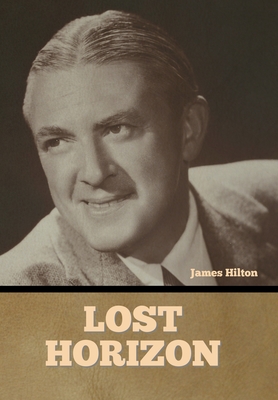
Lost Horizon
James Hilton (9 September 1900 - 20 December 1954) was an English novelist best remembered for several best-sellers, including Lost Horizon and Goodbye, Mr. Chips. He also wrote Hollywood screenplays. Lost HorizonFirst published in 1933, this novel won Hilton the Hawthornden Prize in 1934. Later, Pocket Books, which pioneered the publication of small, soft-cover, inexpensive books, picked Lost Horizon as its first title in 1939. For that reason, the novel is frequently called the book that began the "paperback revolution."
Hilton is said to have been inspired to write Lost Horizon, and to invent "Shangri-La" by reading the National Geographic articles of Joseph Rock, an Austrian-American botanist and ethnologist exploring the southwestern Chinese provinces and Tibetan borderlands. Still living in Britain at the time, Hilton was perhaps influenced by the Tibetan travel articles of early travelers in Tibet whose writings were found in the British Library. Christian Zeeman, the Danish father of the mathematician Christopher Zeeman, has also been claimed to be the model for the hero of the story. He disappeared while living in Japan (where his son was born in 1925), and was reputed to be living incognito in a Zen Buddhist monastery.
Some say that the isolated valley town of Weaverville, California, in far-northern Trinity County, was a source, but this is the result of a misinterpretation of a comment by Hilton in a 1941 interview, in which he said that Weaverville reminded him of Shangri-La. Coincidentally, Junction City (about 8 miles from Weaverville) now has a Tibetan Buddhist centre with the occasional Tibetan monks in saffron robes.
The name "Shangri-La" has become a byword for a mythical utopia, a permanently happy land, isolated from the world. After the Doolittle Raid on Tokyo, when the fact that the bombers had flown from an aircraft carrier remained highly classified, U.S. President Franklin D. Roosevelt told the press facetiously that they had taken off from Shangri-La. The Navy subsequently gave that name to an aircraft carrier, and Roosevelt named his presidential retreat in Maryland Shangri-La. (Later, President Dwight D. Eisenhower renamed the retreat Camp David after his grandson, and that name has been used for it ever since.) Zhongdian, a mountain region of south-west China, has been renamed Shangri-La (Xianggelila), based on its claim to have inspired Hilton's book.(wikipedia.org)
PRP: 244.93 Lei

Acesta este Prețul Recomandat de Producător. Prețul de vânzare al produsului este afișat mai jos.
220.44Lei
220.44Lei
244.93 LeiPrimești 220 puncte
Indisponibil
Descrierea produsului
James Hilton (9 September 1900 - 20 December 1954) was an English novelist best remembered for several best-sellers, including Lost Horizon and Goodbye, Mr. Chips. He also wrote Hollywood screenplays. Lost HorizonFirst published in 1933, this novel won Hilton the Hawthornden Prize in 1934. Later, Pocket Books, which pioneered the publication of small, soft-cover, inexpensive books, picked Lost Horizon as its first title in 1939. For that reason, the novel is frequently called the book that began the "paperback revolution."
Hilton is said to have been inspired to write Lost Horizon, and to invent "Shangri-La" by reading the National Geographic articles of Joseph Rock, an Austrian-American botanist and ethnologist exploring the southwestern Chinese provinces and Tibetan borderlands. Still living in Britain at the time, Hilton was perhaps influenced by the Tibetan travel articles of early travelers in Tibet whose writings were found in the British Library. Christian Zeeman, the Danish father of the mathematician Christopher Zeeman, has also been claimed to be the model for the hero of the story. He disappeared while living in Japan (where his son was born in 1925), and was reputed to be living incognito in a Zen Buddhist monastery.
Some say that the isolated valley town of Weaverville, California, in far-northern Trinity County, was a source, but this is the result of a misinterpretation of a comment by Hilton in a 1941 interview, in which he said that Weaverville reminded him of Shangri-La. Coincidentally, Junction City (about 8 miles from Weaverville) now has a Tibetan Buddhist centre with the occasional Tibetan monks in saffron robes.
The name "Shangri-La" has become a byword for a mythical utopia, a permanently happy land, isolated from the world. After the Doolittle Raid on Tokyo, when the fact that the bombers had flown from an aircraft carrier remained highly classified, U.S. President Franklin D. Roosevelt told the press facetiously that they had taken off from Shangri-La. The Navy subsequently gave that name to an aircraft carrier, and Roosevelt named his presidential retreat in Maryland Shangri-La. (Later, President Dwight D. Eisenhower renamed the retreat Camp David after his grandson, and that name has been used for it ever since.) Zhongdian, a mountain region of south-west China, has been renamed Shangri-La (Xianggelila), based on its claim to have inspired Hilton's book.(wikipedia.org)
Detaliile produsului



