





Quran Scientific Errors -
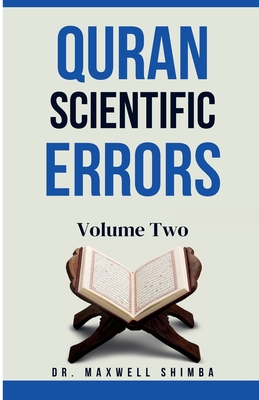
Quran Scientific Errors -
Quran Scientific Errors Quran Scientific Errors by Dr. Maxwell Shimba is a critical examination of claims that the Qur'an contains divinely inspired scientific knowledge. The book delves into numerous verses that have been cited by apologists as evidence of advanced scientific understanding, scrutinizing their validity in the light of modern discoveries. Dr. Shimba argues that these verses, when critically analyzed, often reveal inconsistencies, inaccuracies, or a reliance on pre-modern knowledge, challenging the assertion that the Qur'an possesses unique scientific foresight. The author begins by placing the Qur'anic text in its historical and cultural context, emphasizing the scientific understanding of the 7th-century Arabian Peninsula. By comparing Qur'anic descriptions to the beliefs and practices of neighboring civilizations, including the Greeks, Persians, and Syriac Christians, Dr. Shimba illustrates how many of the ideas in the Qur'an align with contemporary knowledge rather than transcending it. His methodology involves textual analysis, historical references, and comparisons with modern scientific principles. The book examines various scientific topics addressed in the Qur'an, such as embryology, astronomy, meteorology, and geology. Dr. Shimba evaluates claims regarding the development of the human embryo, the nature of celestial bodies, and the processes governing the earth's weather and geological formations. He highlights how many of these descriptions reflect the observational limitations and misconceptions of the time rather than providing groundbreaking insight. One of the major sections explores the Qur'anic verses on human embryology. Dr. Shimba critiques the description of the embryo as a "clot of blood" and the notion that gender is determined after this stage of development. Modern embryology has shown that gender is determined at the moment of fertilization, and there is no stage where the embryo resembles a clot. This section also compares the Qur'an's embryological descriptions to ancient Greek and Indian medical texts, suggesting a shared intellectual lineage. The book dedicates significant attention to Qur'anic verses on astronomy. Dr. Shimba critiques the idea that the sun and moon orbit the Earth or that the heavens are a "ceiling" or "roof" supported without pillars. He contrasts these descriptions with modern cosmology, which reveals the vastness of space, the heliocentric model, and the structure of the universe. The author
PRP: 123.94 Lei

Acesta este Prețul Recomandat de Producător. Prețul de vânzare al produsului este afișat mai jos.
111.55Lei
111.55Lei
123.94 LeiPrimești 111 puncte
Indisponibil
Descrierea produsului
Quran Scientific Errors Quran Scientific Errors by Dr. Maxwell Shimba is a critical examination of claims that the Qur'an contains divinely inspired scientific knowledge. The book delves into numerous verses that have been cited by apologists as evidence of advanced scientific understanding, scrutinizing their validity in the light of modern discoveries. Dr. Shimba argues that these verses, when critically analyzed, often reveal inconsistencies, inaccuracies, or a reliance on pre-modern knowledge, challenging the assertion that the Qur'an possesses unique scientific foresight. The author begins by placing the Qur'anic text in its historical and cultural context, emphasizing the scientific understanding of the 7th-century Arabian Peninsula. By comparing Qur'anic descriptions to the beliefs and practices of neighboring civilizations, including the Greeks, Persians, and Syriac Christians, Dr. Shimba illustrates how many of the ideas in the Qur'an align with contemporary knowledge rather than transcending it. His methodology involves textual analysis, historical references, and comparisons with modern scientific principles. The book examines various scientific topics addressed in the Qur'an, such as embryology, astronomy, meteorology, and geology. Dr. Shimba evaluates claims regarding the development of the human embryo, the nature of celestial bodies, and the processes governing the earth's weather and geological formations. He highlights how many of these descriptions reflect the observational limitations and misconceptions of the time rather than providing groundbreaking insight. One of the major sections explores the Qur'anic verses on human embryology. Dr. Shimba critiques the description of the embryo as a "clot of blood" and the notion that gender is determined after this stage of development. Modern embryology has shown that gender is determined at the moment of fertilization, and there is no stage where the embryo resembles a clot. This section also compares the Qur'an's embryological descriptions to ancient Greek and Indian medical texts, suggesting a shared intellectual lineage. The book dedicates significant attention to Qur'anic verses on astronomy. Dr. Shimba critiques the idea that the sun and moon orbit the Earth or that the heavens are a "ceiling" or "roof" supported without pillars. He contrasts these descriptions with modern cosmology, which reveals the vastness of space, the heliocentric model, and the structure of the universe. The author
Detaliile produsului



