





Suffolk in the Middle Ages: Studies in Places and Place-Names, the Sutton Hoo Ship-Burial, Saints, Mummies and Crosses, Domesday Book and Chronicl
Suffolk in the Middle Ages: Studies in Places and Place-Names, the Sutton Hoo Ship-Burial, Saints, Mummies and Crosses, Domesday Book and Chronicl
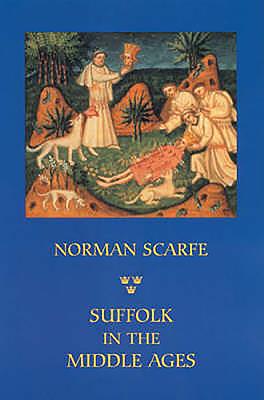
Norman Scarfe explores place names, the Sutton Hoo ship burial, the coming of Christianity, and the abbey at Bury St Edmunds, concluding with an evocative study of five Suffolk places - Southwold, Dunwich, Yoxford, and Wingfield and Fressingfield. The modern landscape of Suffolk is still essentially a medieval one, though much of it is even earlier: the five hundred medieval churches and ten thousand 'listed' houses 'of historic or architectural interest', and the 'Hundred'lanes going back at least to the tenth century, are often found to be set in a landscape created before the Roman conquest. Suffolk in the Middle Ages opens with a discussion of the earliest written records, the place-names, as a guide to settlement-patterns, including the setting of Sutton Hoo. Among the grave-goods found in that celebrated ship and discussed here was the whetstone-sceptre; asked to carry it from its showcase in the British Museum to the laboratory, the author acknowledges a closer feeling of involvement even than helping to re-open the ship in its mound in 1966. His explanation of the presence of the whetstone-sceptre, printed here, has never been challenged. The identification of a carved Anglo-Saxon cross at Iken in 1977 prompted the essay here on St Botolph and the coming of East Anglian Christianity. This leads to a consideration of the Danish invasion of East Anglia, and a reexamination of the posthumous victory of King Edmund and Christianity as portrayed in an imaginary Breckland warren on the front of this book. Scarfe's carefully reasoned argument that the Metropolitan Museum's famous walrusivory cross was made for the monks' choir at Bury has never been refuted. Life in Bury abbey is vividly reconstructed: it was the most richly documented flowering of the work of East Anglia's apostles, Felix and Fursa, which alsoled to the phenomenal establishment in Suffolk by 1086 of four hundred of the five hundred medieval churches. In four East Suffolk essays, Southwold, Dunwich, Yoxford and Wingfield are exposed to Norman Scarfe's interpretativeskills. He reveals a past few could have guessed at, often quite as curious as the 'Two Strange Tales' unravelled in his concluding pages.
PRP: 194.92 Lei

Acesta este Prețul Recomandat de Producător. Prețul de vânzare al produsului este afișat mai jos.
175.43Lei
175.43Lei
194.92 LeiPrimești 175 puncte
Livrare in 2-4 saptamani
Descrierea produsului
Norman Scarfe explores place names, the Sutton Hoo ship burial, the coming of Christianity, and the abbey at Bury St Edmunds, concluding with an evocative study of five Suffolk places - Southwold, Dunwich, Yoxford, and Wingfield and Fressingfield. The modern landscape of Suffolk is still essentially a medieval one, though much of it is even earlier: the five hundred medieval churches and ten thousand 'listed' houses 'of historic or architectural interest', and the 'Hundred'lanes going back at least to the tenth century, are often found to be set in a landscape created before the Roman conquest. Suffolk in the Middle Ages opens with a discussion of the earliest written records, the place-names, as a guide to settlement-patterns, including the setting of Sutton Hoo. Among the grave-goods found in that celebrated ship and discussed here was the whetstone-sceptre; asked to carry it from its showcase in the British Museum to the laboratory, the author acknowledges a closer feeling of involvement even than helping to re-open the ship in its mound in 1966. His explanation of the presence of the whetstone-sceptre, printed here, has never been challenged. The identification of a carved Anglo-Saxon cross at Iken in 1977 prompted the essay here on St Botolph and the coming of East Anglian Christianity. This leads to a consideration of the Danish invasion of East Anglia, and a reexamination of the posthumous victory of King Edmund and Christianity as portrayed in an imaginary Breckland warren on the front of this book. Scarfe's carefully reasoned argument that the Metropolitan Museum's famous walrusivory cross was made for the monks' choir at Bury has never been refuted. Life in Bury abbey is vividly reconstructed: it was the most richly documented flowering of the work of East Anglia's apostles, Felix and Fursa, which alsoled to the phenomenal establishment in Suffolk by 1086 of four hundred of the five hundred medieval churches. In four East Suffolk essays, Southwold, Dunwich, Yoxford and Wingfield are exposed to Norman Scarfe's interpretativeskills. He reveals a past few could have guessed at, often quite as curious as the 'Two Strange Tales' unravelled in his concluding pages.
Detaliile produsului



