





Superstition and Science
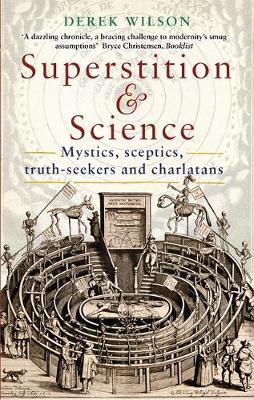
Superstition and Science
'A dazzling chronicle, a bracing challenge to modernity's smug assumptions' - Bryce Christensen, Booklist
'O what a world of profit and delight
Of power, of honour and omnipotence
Is promised to the studious artisan.'
Christopher Marlowe, Dr Faustus
Between the Renaissance and the Enlightenment, Europe changed out of all recognition. Particularly transformative was the ardent quest for knowledge and the astounding discoveries and inventions which resulted from it. The movement of blood round the body; the movement of the earth round the sun; the velocity of falling objects (and, indeed, why objects fall) - these and numerous other mysteries had been solved by scholars in earnest pursuit of scientia.
This fascinating account of the profound changes undergone by Europe between the Renaissance and the Enlightenment will cover ground including folk religion and its pagan past; Catholicism and its saintly dogma; alchemy, astrology and natural philosophy; Islamic and Jewish traditions; and the discovery of new countries and cultures.
By the mid-seventeenth century 'science mania' had set in; the quest for knowledge had become a pursuit of cultured gentlemen. In 1663 The Royal Society of London for Improving Natural Knowledge received its charter. Three years later the French Academy of Sciences was founded. Most other European capitals were not slow to follow suit. In 1725 we encounter the first use of the word 'science' meaning 'a branch of study concerned either with a connected body of demonstrated truths or with observed facts systematically classified'. Yet, it was only nine years since the last witch had been executed in Britain - a reminder that, although the relationship of people to their environment was changing profoundly, deep-rooted fears and attitudes remained strong.
'O what a world of profit and delight
Of power, of honour and omnipotence
Is promised to the studious artisan.'
Christopher Marlowe, Dr Faustus
Between the Renaissance and the Enlightenment, Europe changed out of all recognition. Particularly transformative was the ardent quest for knowledge and the astounding discoveries and inventions which resulted from it. The movement of blood round the body; the movement of the earth round the sun; the velocity of falling objects (and, indeed, why objects fall) - these and numerous other mysteries had been solved by scholars in earnest pursuit of scientia.
This fascinating account of the profound changes undergone by Europe between the Renaissance and the Enlightenment will cover ground including folk religion and its pagan past; Catholicism and its saintly dogma; alchemy, astrology and natural philosophy; Islamic and Jewish traditions; and the discovery of new countries and cultures.
By the mid-seventeenth century 'science mania' had set in; the quest for knowledge had become a pursuit of cultured gentlemen. In 1663 The Royal Society of London for Improving Natural Knowledge received its charter. Three years later the French Academy of Sciences was founded. Most other European capitals were not slow to follow suit. In 1725 we encounter the first use of the word 'science' meaning 'a branch of study concerned either with a connected body of demonstrated truths or with observed facts systematically classified'. Yet, it was only nine years since the last witch had been executed in Britain - a reminder that, although the relationship of people to their environment was changing profoundly, deep-rooted fears and attitudes remained strong.
PRP: 88.33 Lei

Acesta este Prețul Recomandat de Producător. Prețul de vânzare al produsului este afișat mai jos.
79.50Lei
79.50Lei
88.33 LeiPrimești 79 puncte
Indisponibil
Descrierea produsului
'A dazzling chronicle, a bracing challenge to modernity's smug assumptions' - Bryce Christensen, Booklist
'O what a world of profit and delight
Of power, of honour and omnipotence
Is promised to the studious artisan.'
Christopher Marlowe, Dr Faustus
Between the Renaissance and the Enlightenment, Europe changed out of all recognition. Particularly transformative was the ardent quest for knowledge and the astounding discoveries and inventions which resulted from it. The movement of blood round the body; the movement of the earth round the sun; the velocity of falling objects (and, indeed, why objects fall) - these and numerous other mysteries had been solved by scholars in earnest pursuit of scientia.
This fascinating account of the profound changes undergone by Europe between the Renaissance and the Enlightenment will cover ground including folk religion and its pagan past; Catholicism and its saintly dogma; alchemy, astrology and natural philosophy; Islamic and Jewish traditions; and the discovery of new countries and cultures.
By the mid-seventeenth century 'science mania' had set in; the quest for knowledge had become a pursuit of cultured gentlemen. In 1663 The Royal Society of London for Improving Natural Knowledge received its charter. Three years later the French Academy of Sciences was founded. Most other European capitals were not slow to follow suit. In 1725 we encounter the first use of the word 'science' meaning 'a branch of study concerned either with a connected body of demonstrated truths or with observed facts systematically classified'. Yet, it was only nine years since the last witch had been executed in Britain - a reminder that, although the relationship of people to their environment was changing profoundly, deep-rooted fears and attitudes remained strong.
'O what a world of profit and delight
Of power, of honour and omnipotence
Is promised to the studious artisan.'
Christopher Marlowe, Dr Faustus
Between the Renaissance and the Enlightenment, Europe changed out of all recognition. Particularly transformative was the ardent quest for knowledge and the astounding discoveries and inventions which resulted from it. The movement of blood round the body; the movement of the earth round the sun; the velocity of falling objects (and, indeed, why objects fall) - these and numerous other mysteries had been solved by scholars in earnest pursuit of scientia.
This fascinating account of the profound changes undergone by Europe between the Renaissance and the Enlightenment will cover ground including folk religion and its pagan past; Catholicism and its saintly dogma; alchemy, astrology and natural philosophy; Islamic and Jewish traditions; and the discovery of new countries and cultures.
By the mid-seventeenth century 'science mania' had set in; the quest for knowledge had become a pursuit of cultured gentlemen. In 1663 The Royal Society of London for Improving Natural Knowledge received its charter. Three years later the French Academy of Sciences was founded. Most other European capitals were not slow to follow suit. In 1725 we encounter the first use of the word 'science' meaning 'a branch of study concerned either with a connected body of demonstrated truths or with observed facts systematically classified'. Yet, it was only nine years since the last witch had been executed in Britain - a reminder that, although the relationship of people to their environment was changing profoundly, deep-rooted fears and attitudes remained strong.
Detaliile produsului



