





The Mason-Bees
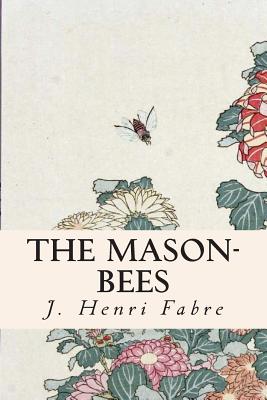
The Mason-Bees
This zoology study contains all the essays on the Chalicodomae, or Mason bees proper, which so greatly enhance the interest of the early volumes of the "Souvenirs entomologiques." I have also included an essay on the author's Cats and one on Red Ants--the only study of Ants comprised in the "Souvenirs"--both of which bear upon the sense of direction possessed by the Bees. Mason bee is a name now commonly used for species of bees in the genus Osmia, of the family Megachilidae. Mason bees are named for their habit of using mud or other "masonry" products in constructing their nests, which are made in naturally occurring gaps such as between cracks in stones or other small dark cavities; when available some species preferentially use hollow stems or holes in wood made by wood-boring insects.[1] Species of the genus include the orchard mason bee Osmia lignaria, the blueberry bee O. ribifloris, and the hornfaced bee O. cornifrons. The former two are native to the Americas and the latter to Japan, although O. lignaria and O. cornifrons have been moved from their native ranges for commercial purposes. The red mason bee, Osmia bicornis, is found across the European continent. Over 300 species are found across the Northern Hemisphere. Most occur in temperate habitats within the Palearctic and Neartic zones, and are active from spring through late summer.[2] Osmia species are frequently metallic green or blue, though many are blackish and at least one rust-red. Most have black ventral scopae which are difficult to notice unless laden with pollen. They have arolia between their claws, unlike Megachile or Anthidium species. Historically, the term mason bee has also been used to refer to bees from a number of other genera under Megachilidae such as Chalicodoma, most notably in "The Mason-Bees" by Jean-Henri Fabre and his translator Alexander Teixeira de Mattos in 1914. Solitary bees produce neither honey nor beeswax. They are immune from acarine and Varroa mites, but have their own unique parasites, pests, and diseases. The nesting habits of many Osmia lend themselves to easy cultivation, and a number of Osmia are commercially propagated in different parts of the world to improve pollination in fruit and nut production.[9] Commercial pollinators include O. lignaria, O. bicornis, O. cornuta, O. cornifrons, O. ribifloris, and O. californica. They are used both as an alternative to and as an augmentation for European honey bees. Mason bees used for orchard and other agric
PRP: 53.09 Lei

Acesta este Prețul Recomandat de Producător. Prețul de vânzare al produsului este afișat mai jos.
47.78Lei
47.78Lei
53.09 LeiPrimești 47 puncte
Livrare in 2-4 saptamani
Descrierea produsului
This zoology study contains all the essays on the Chalicodomae, or Mason bees proper, which so greatly enhance the interest of the early volumes of the "Souvenirs entomologiques." I have also included an essay on the author's Cats and one on Red Ants--the only study of Ants comprised in the "Souvenirs"--both of which bear upon the sense of direction possessed by the Bees. Mason bee is a name now commonly used for species of bees in the genus Osmia, of the family Megachilidae. Mason bees are named for their habit of using mud or other "masonry" products in constructing their nests, which are made in naturally occurring gaps such as between cracks in stones or other small dark cavities; when available some species preferentially use hollow stems or holes in wood made by wood-boring insects.[1] Species of the genus include the orchard mason bee Osmia lignaria, the blueberry bee O. ribifloris, and the hornfaced bee O. cornifrons. The former two are native to the Americas and the latter to Japan, although O. lignaria and O. cornifrons have been moved from their native ranges for commercial purposes. The red mason bee, Osmia bicornis, is found across the European continent. Over 300 species are found across the Northern Hemisphere. Most occur in temperate habitats within the Palearctic and Neartic zones, and are active from spring through late summer.[2] Osmia species are frequently metallic green or blue, though many are blackish and at least one rust-red. Most have black ventral scopae which are difficult to notice unless laden with pollen. They have arolia between their claws, unlike Megachile or Anthidium species. Historically, the term mason bee has also been used to refer to bees from a number of other genera under Megachilidae such as Chalicodoma, most notably in "The Mason-Bees" by Jean-Henri Fabre and his translator Alexander Teixeira de Mattos in 1914. Solitary bees produce neither honey nor beeswax. They are immune from acarine and Varroa mites, but have their own unique parasites, pests, and diseases. The nesting habits of many Osmia lend themselves to easy cultivation, and a number of Osmia are commercially propagated in different parts of the world to improve pollination in fruit and nut production.[9] Commercial pollinators include O. lignaria, O. bicornis, O. cornuta, O. cornifrons, O. ribifloris, and O. californica. They are used both as an alternative to and as an augmentation for European honey bees. Mason bees used for orchard and other agric
Detaliile produsului



