





Tomorrow Shall Be My Dancing Day: A Medieval Carol
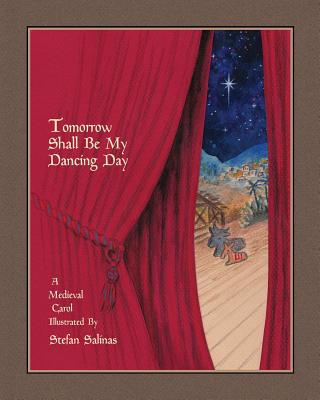
Tomorrow Shall Be My Dancing Day: A Medieval Carol
This anonymous carol first appeared in William B. Sandys' "Christmas Carols Ancient and Modern", in 1833. It is believed to have been written sometime within the fourteenth century. In it, the narrator, who is Jesus, tells us the story of his life, and he refers to it as a play. Also, he repeats again and again the wish to dance with his true love, which has been generally interpreted as the Church, the Bride of Christ. It is believed that the practice of celebrate the birth of Jesus by caroling - singing simple songs of praise and worship - dates back to the early second century. The terms ballad and carol implied dancing as well as singing, and were indeed sung by people dancing. They were influenced by early liturgical music, folk songs, festival dances and the troubadour repertoire. Carole dances were performed in circles and spirals. In medieval Europe, mystery plays, which told of the life of Christ, were performed in churches during Christmas Eve, and then later on outdoor stages in the streets. Carols were integrated into these performances. Passion plays also developed out of church rituals. They depict the suffering, death, and Resurrection of Christ.
PRP: 66.05 Lei

Acesta este Prețul Recomandat de Producător. Prețul de vânzare al produsului este afișat mai jos.
59.45Lei
59.45Lei
66.05 LeiPrimești 59 puncte
Livrare in 2-4 saptamani
Descrierea produsului
This anonymous carol first appeared in William B. Sandys' "Christmas Carols Ancient and Modern", in 1833. It is believed to have been written sometime within the fourteenth century. In it, the narrator, who is Jesus, tells us the story of his life, and he refers to it as a play. Also, he repeats again and again the wish to dance with his true love, which has been generally interpreted as the Church, the Bride of Christ. It is believed that the practice of celebrate the birth of Jesus by caroling - singing simple songs of praise and worship - dates back to the early second century. The terms ballad and carol implied dancing as well as singing, and were indeed sung by people dancing. They were influenced by early liturgical music, folk songs, festival dances and the troubadour repertoire. Carole dances were performed in circles and spirals. In medieval Europe, mystery plays, which told of the life of Christ, were performed in churches during Christmas Eve, and then later on outdoor stages in the streets. Carols were integrated into these performances. Passion plays also developed out of church rituals. They depict the suffering, death, and Resurrection of Christ.
Detaliile produsului



